Boundaries and becoming
The Weeds Between the Fences
Clearing an overgrown backyard taught me about receiving help, taking responsibility, and carrying only what is mine.
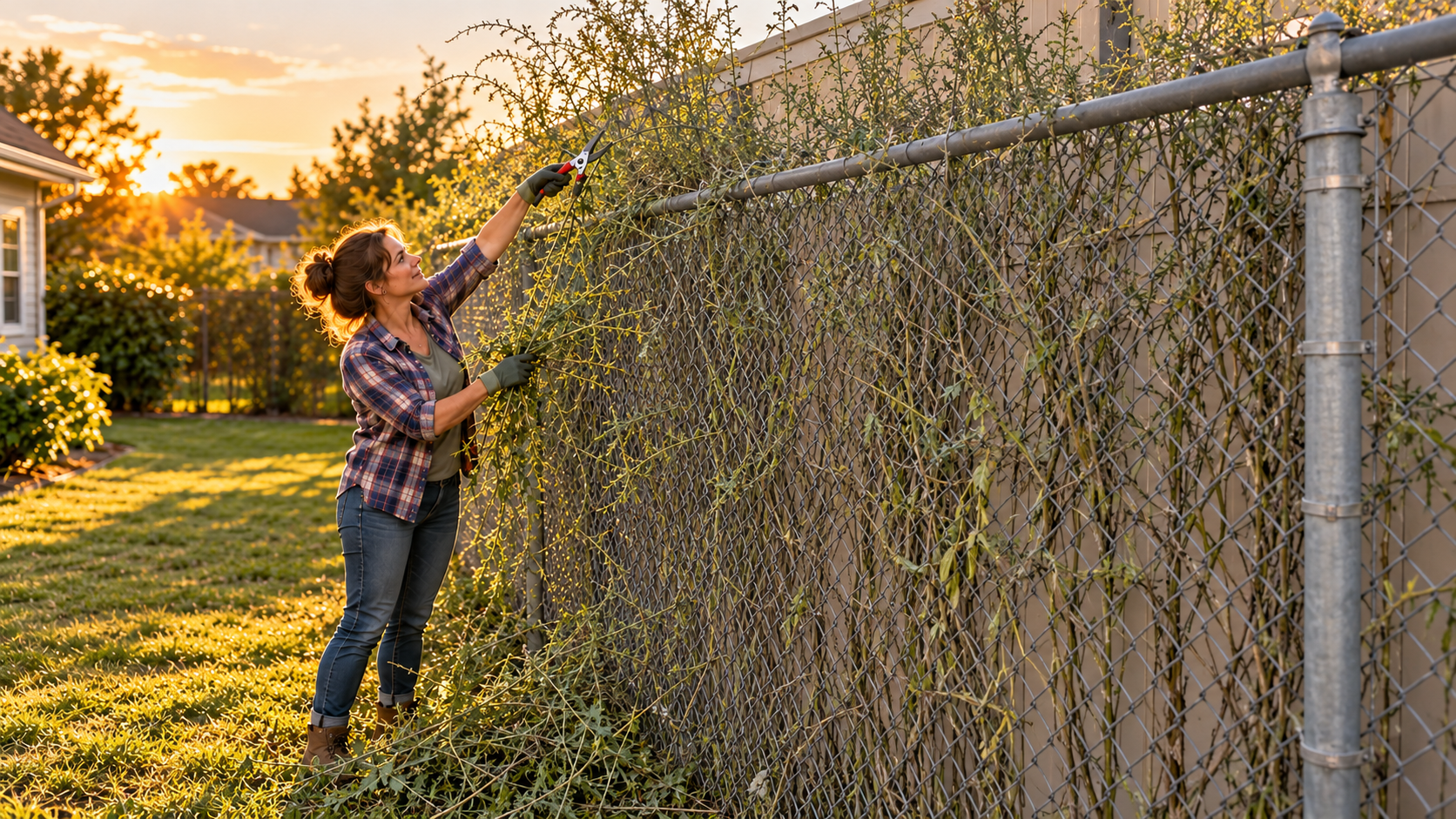
Last week, I shared that a man from the city knocked on my door about my backyard. The weeds were out of control. Some of them were probably eight feet tall, and it looked less like a backyard and more like an Amazon jungle.
I was not trying to pretend the problem was not mine. My mower had died. I bought another one thinking it was rechargeable, but it needed an extension cord that would not reach the backyard. I could mow the front and the sides, but not the back.
I looked into paying someone, but I could not afford to keep paying for the same work while everything was still growing. My plan was to clear it once the growing season slowed down. In the meantime, the weeds kept growing.
The man from the city listened. He asked whether I would do the work myself if I had the right tools, then connected me with someone who could lend me hand cutters and haul the weeds away. He showed me mercy while still asking me to take responsibility.
Later, I told someone who has become important to me what had happened. I am not quick to ask for help. Part of that is pride, and part of it comes from old wounds. Sometimes accepting help has felt like it might leave me owing someone something or make me a burden.
I did not ask him to come. He told me he was coming, and he brought better tools. He did not stand at a distance and tell me I had this. He came and worked beside me.
On my personal page, I joked that even the weeds needed a knight in shining armor. The picture still makes me laugh, but beneath the humor was something I needed to learn: receiving practical help is not the same as giving away my responsibility.
The weeds I first noticed inside my yard were completely mine. They were tall, they were out of control, and I had to own that. Together, we cleared what was growing inside my fence.
As those weeds came down, something else became visible. The weeds people could see most clearly from outside were not actually rooted in the part of the yard we had just cleared. They were growing in the narrow space between two fence lines.
There was not enough room for me to walk between those fences. My chain-link fence is six feet tall, but it sits on a concrete border that rises three to four inches above the ground all around the perimeter of my yard. From where I stood, the top of that fence was about six feet four inches above the ground. I am five foot five, so the fence stood roughly eleven inches above my head. The plastic privacy fence on the other side is also six feet tall and stands a little higher than mine. Reaching over my fence was difficult, and using a weed trimmer would have thrown the cut weeds directly over the privacy fence.
While he was helping with the yard, he saw those weeds and wanted to take the trimmer to all of them. He also understood that doing so could create a mess on the other side and turn help into a new problem. So he left them alone and allowed me to decide how to handle them.
Later, when I was there by myself, I returned to the fence. I cut the weeds by hand, one section at a time, and guided what I could onto my side so it would not be thrown over the other fence.
I was not helpless, and I was not avoiding responsibility. I handled the weeds inside my yard. Then I handled what I could responsibly reach from my side of the fence. After that, I had to stop where my responsibility stopped.
That physical boundary showed me something about emotional and relational boundaries too. Sometimes the problem people can see is not rooted where it appears to be. Sometimes clearing what is obviously ours reveals that part of the issue is growing in a place we cannot fully reach or control.
I can acknowledge that my yard needed work. I can also be honest that the way the concern reached me hurt. Both things can be true. Taking responsibility for what is mine does not require me to take responsibility for everything on both sides of the fence.
When we are hurt, it is easy to start noticing every wrong thing the other person does. Things that did not bother us before can suddenly feel important because now we are keeping score. I had to stop and ask myself whether speaking would address a real problem or simply return the hurt I had received.
My part was to tend my side without turning the work into retaliation. His part, as the person helping me, was to bring the tools and strength I did not have without taking over, becoming offended for me, or creating a new conflict on my behalf.
That is healthy help. We can help carry a burden without claiming ownership of someone else's life. We can stand beside a person without fighting every battle for them. We can offer tools, strength, wisdom, and presence while still allowing them to decide what they are responsible for doing.
I have been thinking about how often my desire to help people has been shaped by my own wounds. I have lived with roommates who were not healthy roommates and stayed in relationships that were not healthy relationships. I searched for the good, made excuses for harmful patterns, and avoided saying difficult things because I did not want to hurt anyone.
There is compassion in looking for the good in people, but compassion without truth can become permission for what is not okay. Loving someone as they are does not mean accepting everything they do. Love can acknowledge what is wrong, address it honestly, and sometimes place a firm boundary around it.
The person is not the weed. The unhealthy behavior, belief, or pattern is. Being a safe person does not mean carefully tending every weed so no one ever feels uncomfortable. It means becoming safe enough to tell the truth with love, receive truth with humility, and set a boundary without using it as punishment.
I cannot do another person's healing, repentance, or growing for them. I cannot prepare the soil of a heart that has not chosen to be tended. I can help carry what God gives me to carry, but I cannot live someone else's part of the story.
This is part of becoming. Chapter 2 of Becoming asks us to consider what is shaping our hearts and reminds us that familiar is not the same as true. Overfunctioning can feel like love when it has been familiar for a long time. Avoiding honesty can feel like peace. Carrying what belongs to everyone else can feel like faithfulness.
But familiar does not make it healthy, and love does not ask us to abandon truth. God can teach us to receive help without shame, accept correction without losing ourselves, and recognize where our responsibility begins and ends.
I am still learning to ask better questions. What is God asking me to tend? Is the most visible issue the whole problem? Can I receive what is true even when the way it reached me hurt? Am I carrying something that belongs on the other side of the fence?
Sometimes growth looks like clearing the whole yard. Sometimes it looks like letting someone work beside you. And sometimes it looks like standing on your own side of a very tall fence, cutting carefully by hand, and trusting God enough to leave the rest where it belongs.
“Keep thy heart with all diligence; for out of it are the issues of life.”
Proverbs 4:23 KJV
“Bear ye one another's burdens, and so fulfil the law of Christ.”
Galatians 6:2 KJV
“For every man shall bear his own burden.”
Galatians 6:5 KJV